LOTUS365 Fake Links and Ways to Identify Phishing Websites
LOTUS365 Fake Links and Ways to Identify Phishing Websites
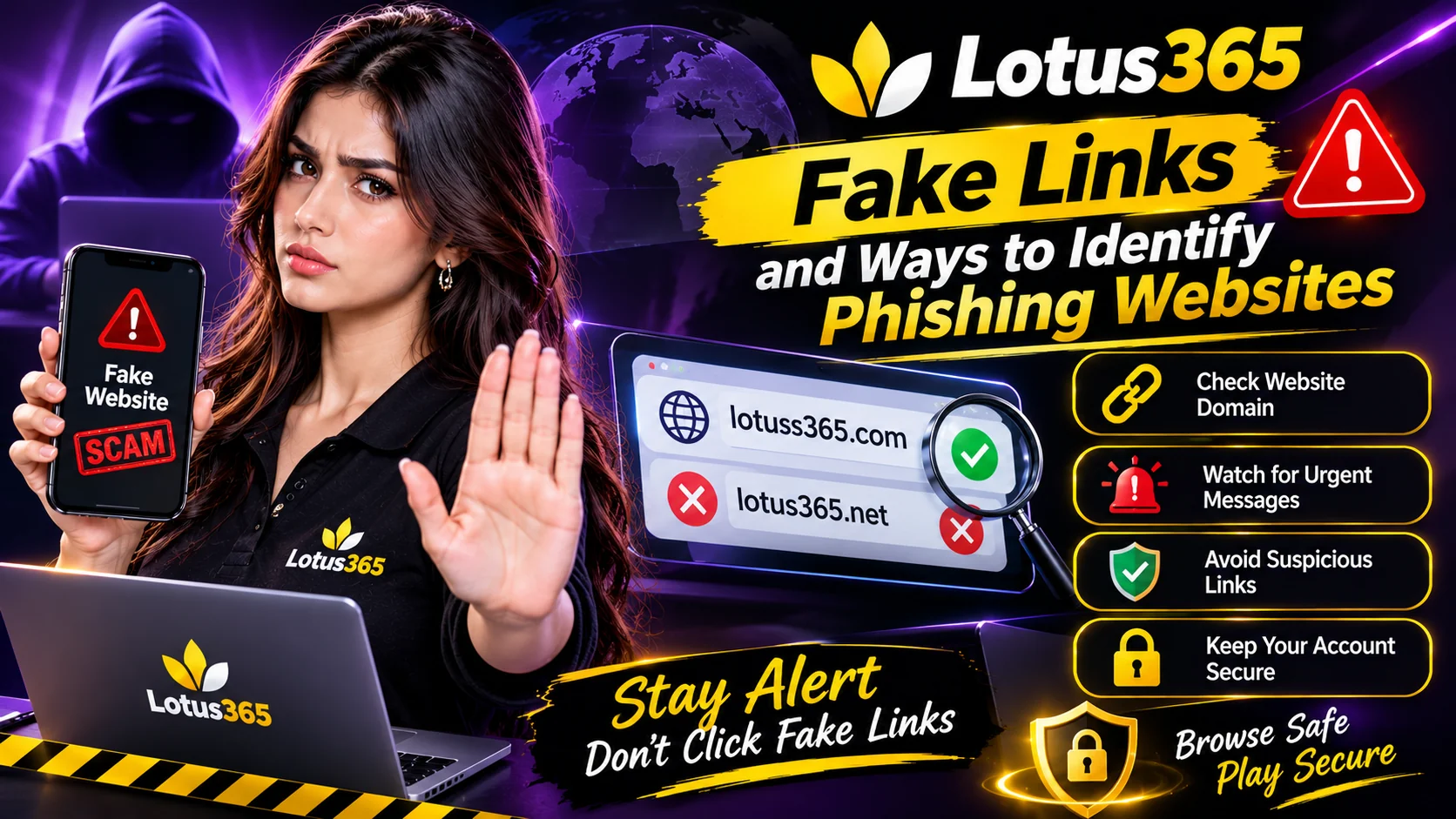
To actively protect your sports betting account from dangerous phishing scams, learning how to quickly identify LOTUS365 Fake Links is an absolute necessity before you ever click or submit sensitive data online. Fraudulent websites are often designed with highly convincing logos and familiar layouts that easily trick users into giving up their private passwords and OTP verification codes. Because blindly clicking the wrong text message or search result can instantly lead to stolen betting funds, this guide will teach you exactly how to verify website domains, spot urgent scam messages, and safely protect your personal information from unverified imposters.
5 Steps to Spot LOTUS365 Fake Links
It is highly crucial to verify the destination URL to completely avoid falling victim to dangerous phishing scams. Scammers often use high-pressure tactics and visually perfect websites to urgently steal your private passwords, banking information, and OTPs. Before typing any sensitive data, follow this simple routine to easily identify LOTUS365 Fake Links:
Check the Address Bar First
Always shift your focus directly to the top URL bar of your web browser before typing any sensitive betting account details.
Look for Spelling Errors
Watch closely for slightly altered brand spellings, extra random words forcefully added in, or strange, overly long subdomains.
Verify the Domain Extension
Avoid completely unfamiliar domain extensions like .xyz or .biz, and aggressively stay away from URLs packed with randomly selected letters and numbers.
Ignore Fake Trust Words
Do not be blindly fooled by scammers strategically adding words like “secure,” “official,” or “bonus” to make a fraudulent domain look highly credible.
Reject High-Pressure Tactics
Never rush to log in just because a suspicious message falsely threatens to permanently restrict your betting account if you don’t act promptly.
How does Lotus365 Login Safety Work?
Your login data is highly intimate account information. You should never enter this sensitive information just because you landed on a page featuring a familiar logo or website design. Because LOTUS365 Fake Links are designed to look identical to the real thing, visual design is no longer a reliable trust factor.
Check Before Logging In:
Before you type your password, run through this quick mental checklist:
If you suddenly get a text message claiming you should verify your betting account right away, and the message strictly includes a login link requesting your password and verification code, this is a scam. This is a great moment to take a break, close the message, and test out the destination domain manually on your own browser.
Before installing any mobile betting application, please check it thoroughly. Application downloads are a particularly massive concern for smartphone users today. A fake web page can easily link to an unknown, malicious website or a corrupted APK file that falsely advertises itself as the official betting app. Remember: just because an application’s file name includes the brand name, that doesn’t actually mean it is official.
A Safer App Checklist Includes:
Protect Your ID from LOTUS365 Fake Links
The private information you actively use to log in is highly sensitive data that should never be given to an unknown entity. To prevent LOTUS365 Fake Links from compromising your account, never give your secure password or private OTP to anyone. Additionally, never share screenshots of your betting dashboard in public chat groups or on social media, as hackers can easily use visible details to illegally access your funds.
Build These Secure Account Habits:
If you strongly suspect that your account information has been leaked through LOTUS365 Fake Links, alter your impacted password immediately using a safe, verified device, and closely check your account history for any betting irregularities.
Why Lotus365 Fake Links Can Be Dangerous
These dangerous links may be aggressively found hidden in paid search results, banner ads, social media posts, public betting forums, phishing emails, and direct private messages. Just because you found a link on a highly familiar social platform, that absolutely doesn’t make the link safe to click.
Common Examples of Phishing Messages Include:
These fraudulent messages will generally seek to violently provoke questions, fear, or a severe sense of urgency in the reader. The absolute best practice to follow to stay safe is remarkably simple: Do check first, click second.
Here are a few highly common signs that could quickly alert you to a fake web site:
Unrealistic Promotions
Beware heavily of sites aggressively offering “unusually high” betting rewards, absolutely “guaranteed” sports profits, or other highly “too good to be true” financial benefits. Scammers know human nature; do not ever overlook your basic security procedures just because of a flashy promotion. When a bonus offer actively demands your immediate registration or asks for highly sensitive banking information upfront, independently check the source before proceeding with any bets.
Urgent Login Requests
Messages demanding clicks by stating things like “your account will be permanently deleted in five minutes” are explicitly meant to elicit a rapid physical action without any critical thought. Never let an urgent, threatening message take the absolute place of your normal security verification routines. Be absolutely sure to manually review the betting website on your own browser.
Unexpected Downloads
If a website aggressively tries to download files automatically to your phone or computer, do not allow it to do so unless you explicitly requested it. This is particularly crucial if the suspicious file is an APK or any kind of similar mobile application package meant to bypass official app stores.
Poor Website Quality
Any of the following visual flaws may be strong indicators of a scam: broken image links, weird and highly incorrect grammar, way too many aggressive pop-ups, text clearly copied and pasted from other web pages, strange third-party ads, and highly unexpected page redirects. While a single minor problem doesn’t necessarily mean that a website is totally fake, when multiple warning signs occur simultaneously, it’s highly reasonable to be very wary.
What About Lotus 365 Promotions?
Wild promotional messages can unfortunately sometimes be used as highly attractive bait by phishing websites. It is entirely possible that a page that is highly suspicious in its design will aggressively be offering an incredibly alluring bonus offer, only to aggressively ask the eager visitor to sign up and deposit money right away.
When you get an exciting betting offer, always check:
Never quickly give in to a “promotion” if it means permanently compromising your core account security.
What to Do If You Clicked a Fake Link
If you accidentally click on a suspicious text link, that doesn’t necessarily mean your betting account is instantly compromised. It is exactly what has occurred since you originally opened it that truly matters. If you just simply read the fake page, safely close the browser window and absolutely don’t fill out any requested info.
However, if you actually entered a password into the fake site, you must change your official password by a secure, separate method as quickly as physically possible. If you foolishly used the exact same password on other critical financial accounts, rapidly update the password on those other accounts as well to prevent a chain reaction.
If you did actively send a private verification code to a scammer, immediately block the compromised account right away through official support and heavily check your recent betting account activity. If you’ve accidentally downloaded an unfamiliar mobile app, absolutely don’t proceed further with opening or installing it. You must immediately remove it from your storage, and then swiftly run a proper, deep security scan on your smart device.
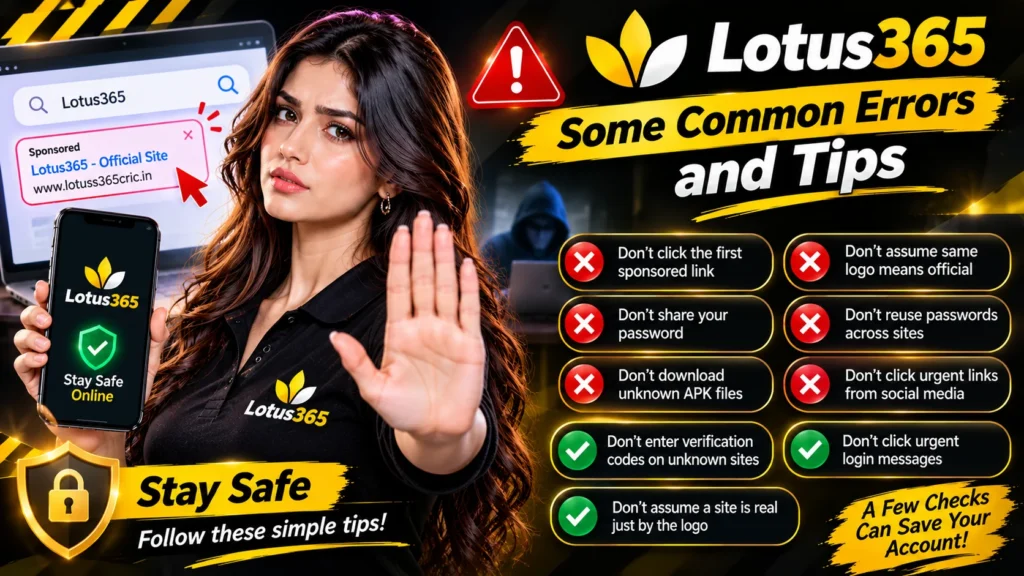
Some common errors and tips
The absolute main error made by eager users is that people quickly type the brand name into a search engine and blindly click on the very first sponsored result, entirely without checking the site’s actual URL domain. One of the other massive errors is falsely thinking that if the site proudly features the exact same logo, color scheme, or graphics, then it is automatically 100% official.
Users should also strictly avoid these behaviors:
There are many small, easy security checks which can easily avert major financial issues.
Conclusion
The absolute master key to successfully identifying LOTUS365 Fake Links is a strict, unwavering attention to detail. Always manually check the web domain before proceeding. Strictly avoid logging in to places unexpectedly or from urgent text messages. Beware highly of “too good to be true” promotional messages and completely unknown app downloads attempting to install on your phone. Most significantly, fiercely safeguard your private account ID, your unique password, and your personal OTP verification codes at all times.